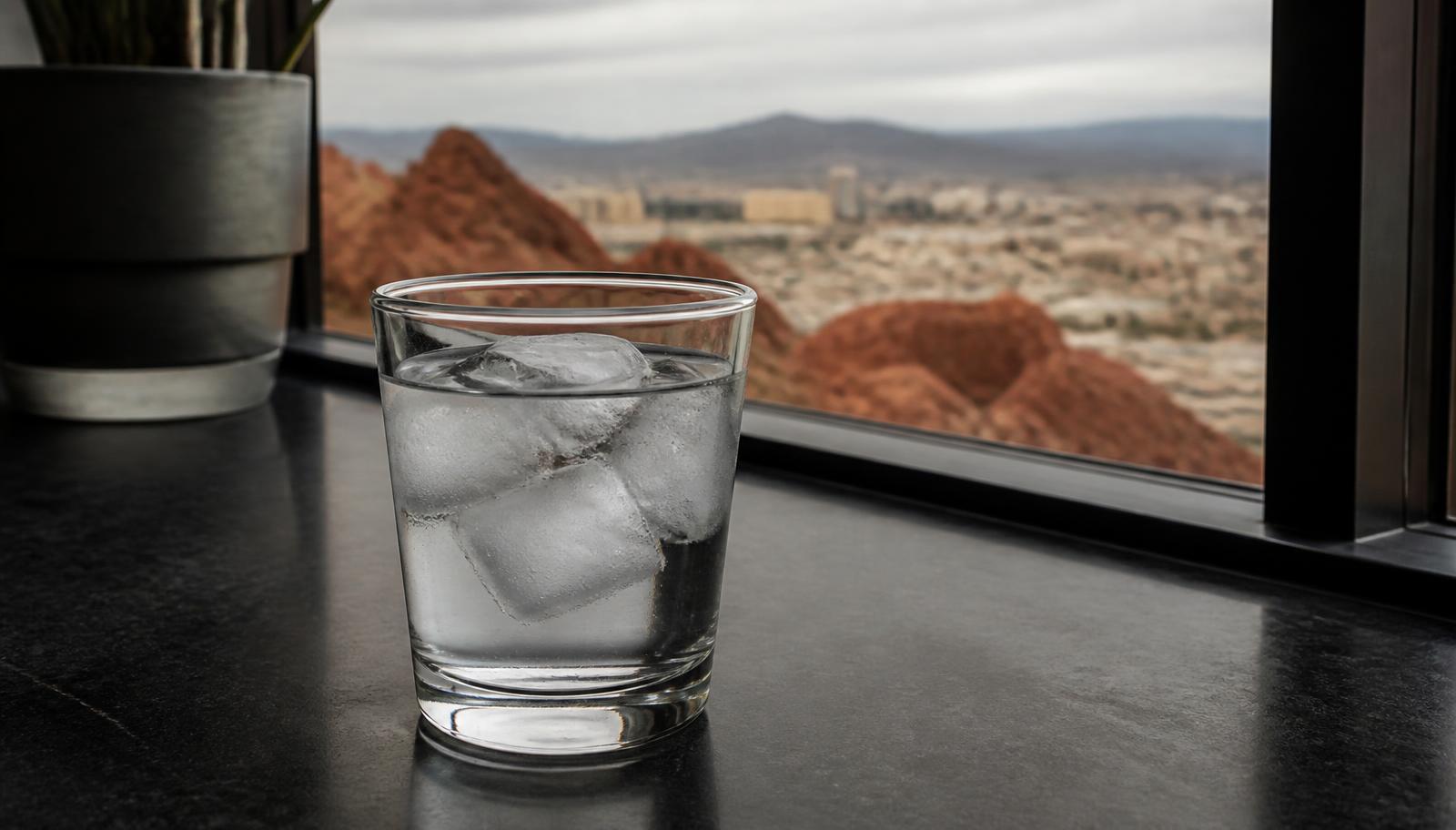
Quick diagnosis by symptom
- Cloudy, white-cored cubes: dissolved minerals — hard water, and likely scale forming inside the machine.
- Stale or flat taste: old ice sitting in the bin, or slow production.
- Musty or moldy taste: biofilm in the mold, chute, or bin.
- Tastes like food: odor absorption from freezer contents or a spent air filter.
- Chlorine or metallic bite: expired or missing carbon water filter.
- Plastic or chemical: new unit, new line, or an aftermarket filter.
- Hollow, small, or slow cubes plus bad taste: mechanical — inlet valve, fill tube, or a scaled evaporator.
Cause 1: Las Vegas hard water and dissolved minerals
Valley tap water comes largely from Lake Mead and the Colorado River, and it carries a heavy load of dissolved calcium and magnesium. When water freezes, those minerals don't disappear — they concentrate. That's the white core in your cubes, and it's the same reason cubes can taste faintly chalky or "mineral-y" here in a way they don't in soft-water cities.
The same minerals plate out on every surface water touches on the way in: the inlet valve screen, the fill tube, the ice mold, and the evaporator. Our Las Vegas hard water appliance guide walks through what that buildup does across the whole home.
Cloudy ice isn't dirty ice
Cause 2: the refrigerator water filter is past due
This is the number one fixable cause we see. A carbon filter removes chlorine taste and sediment; once it's saturated, it stops helping and can begin contributing its own stale flavor. The national guidance of six months assumes average water. Las Vegas is not average.
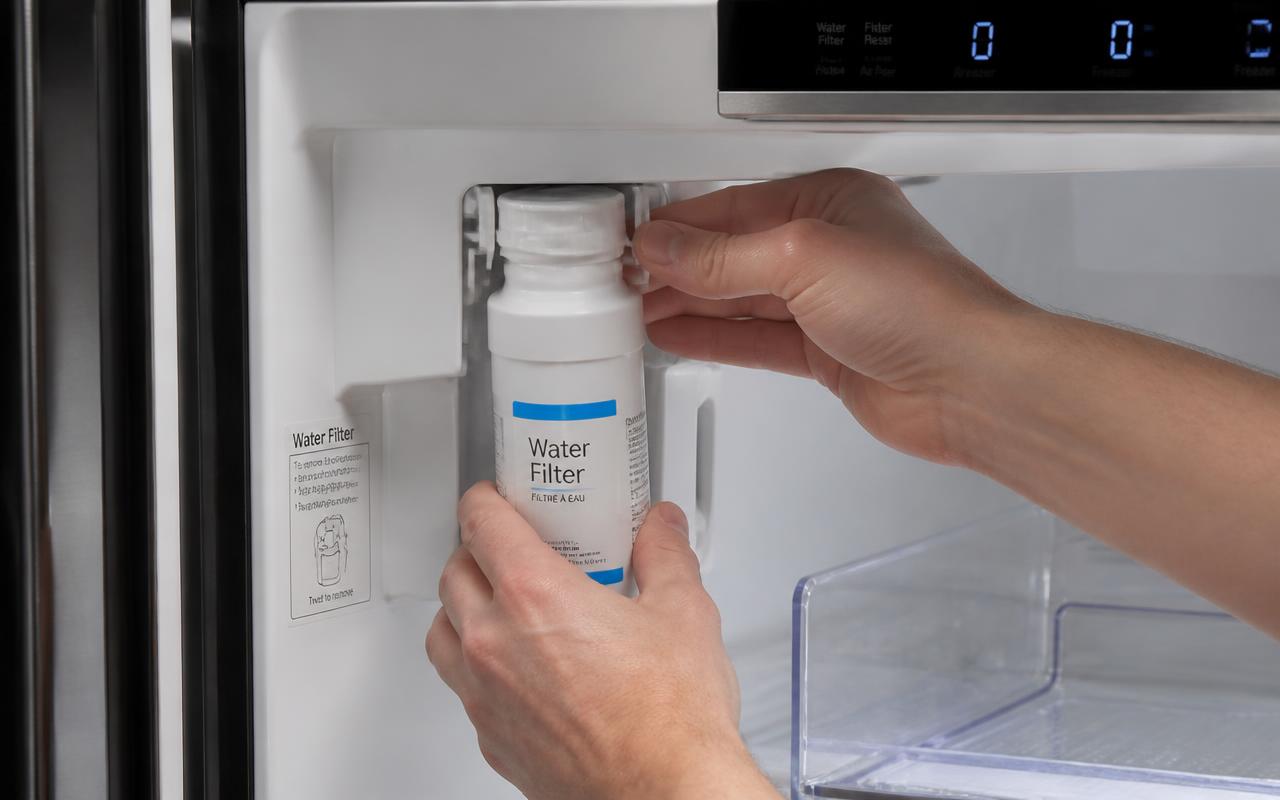
- Replace every 4–5 months in the valley — sooner with a large household or heavy ice use
- Use an OEM or reputable certified filter; the cheapest aftermarket cartridges are the most common source of new off-tastes
- Flush 2–3 gallons through the dispenser after replacing, and discard the first two ice batches
- Note the date on the filter with a marker so you're not guessing
- Also replace the freezer air filter if your model has one
Cause 3: your ice is absorbing freezer odors
Ice is porous and it sublimates continuously. Anything off-gassing in the freezer gets pulled in — onions, garlic, fish, freezer-burned meat, uncovered leftovers, even an open box of baking soda that's long past useful.
- Store strong foods in airtight containers, not just plastic wrap
- Clear out anything freezer-burned or unidentifiable
- Replace the freezer air filter on models that have one
- Keep an open box of baking soda and actually change it every 1–2 months
- Check for a spill under the ice bin — melted, refrozen residue is a common hidden odor source
Cause 4: the ice is simply old
If your household doesn't use much ice, or if production has slowed, cubes can sit for weeks. They shrink, fuse together, and absorb the freezer's air the whole time. Fused, shrunken, or frost-coated cubes are the tell.
Easiest fix in this guide
Cause 5: scale and biofilm inside the machine
The ice mold, chute, and bin are damp, dark, and above freezing during each harvest cycle — ideal conditions for a thin pink or gray biofilm. Combine that with mineral scale from valley water and you get a musty taste that returns within days of dumping the bin.
Dedicated and outdoor ice machines are worse, because they run harder and see more dust. If yours is in an outdoor kitchen, see outdoor kitchen appliance repair.
Cause 6: plastic or chemical taste
Brand new refrigerators, newly replaced water lines, and freshly installed filters all produce a plastic flavor for the first several batches — that's normal and it clears. What isn't normal is a plastic or solvent taste that persists past three full bins. At that point suspect the filter housing, an aftermarket cartridge, or a supply line that was contaminated during install.
Never ignore a sudden chemical taste
How to clean a refrigerator ice maker
- Turn the ice maker off and empty the bin completely
- Remove the bin and wash it in warm soapy water; dry it fully before reinstalling
- Wipe the ice mold, chute, and dispenser flap with a manufacturer-approved cleaner or a 1:1 white vinegar and water solution to dissolve mineral scale
- Let the vinegar solution sit a few minutes on visible scale, then wipe and rinse thoroughly
- Do not use bleach on food-contact ice components unless your manufacturer specifically calls for it
- Turn the ice maker back on and discard the first two full batches
- Repeat every 3–6 months — closer to 3 in Las Vegas
If cleaning doesn't hold — the musty taste is back in a week, or cubes stay hollow and undersized — that's a service call, not a cleaning problem. See ice maker repair in Las Vegas.
Filtration and softening options for Las Vegas homes
Refrigerator carbon filter
The baseline. Handles chlorine taste and sediment. Does not remove hardness.
Whole-house water softener
The best defense against scale across the entire home — ice maker, dishwasher, washer, and water heater all benefit. Softened water tastes slightly different to some people, so pair it with a carbon filter for drinking and ice.
Under-sink carbon or RO system
Reverse osmosis produces the clearest, most neutral-tasting ice available here, and many RO systems can be plumbed to feed the refrigerator. It's the most effective option for taste, at the cost of installation and periodic membrane replacement.
Inline filter on the refrigerator supply
A reasonable middle ground when the refrigerator has no internal filter or when you want a second stage before the fridge.
When bad ice means a repair is needed
- Slow production or ice that never fills the bin
- Hollow, undersized, or misshapen cubes
- A frozen fill tube or an ice bridge sealing the mold
- Water pooling under the bin, or a sheet of ice in the freezer floor
- Musty taste that returns within days of a full cleaning
- Grinding or clicking during harvest cycles
- No ice at all after confirming water supply and filter
Those symptoms point at the water inlet valve, the fill tube heater, a scaled evaporator, a failed ice maker module, or a defrost issue — all repairable. Related: refrigerator repair and freezer repair.
Still tastes off?
We diagnose ice makers across the valley
Built-in, dedicated, outdoor, and luxury ice machines — hard water is our home turf.
Frequently asked questions
Why does my ice taste bad in Las Vegas?
Four causes account for almost all of it: an expired refrigerator water filter, dissolved minerals from very hard Las Vegas tap water, odors absorbed from food in the freezer, and scale or biofilm inside the ice maker itself. Old ice sitting in the bin for weeks is a fifth, very common cause.
Is Las Vegas tap water safe to drink?
Yes — Las Vegas municipal water meets federal drinking water standards. The taste issues here are about hardness and mineral content, plus chlorine used for disinfection, not about safety. Filtration changes taste, not safety.
Why is my ice cloudy and white in the middle?
Cloudy ice is dissolved minerals and trapped air freezing into the cube. Las Vegas water is very hard, so cubes freeze with a white mineral core. It's cosmetic, but it also signals that scale is building inside the ice maker and water lines.
How often should I change my refrigerator water filter in Las Vegas?
Every six months is the standard recommendation, but Las Vegas hard water tends to load filters faster. Many homes here do better on a four-to-five month interval, especially with a high-volume ice maker or a large household.
Why does my ice smell like food?
Ice absorbs odors. Uncovered leftovers, onions, fish, and older frozen food all off-gas inside the freezer, and porous ice pulls those compounds in. A dirty or failing air filter, or a bin of ice that's weeks old, makes it much worse.
Does a whole-house water softener fix bad-tasting ice?
A softener reduces scale buildup, which helps the ice maker last longer and keeps cubes clearer. Softened water can taste slightly different, though, so most homes pair a softener with a carbon filter at the refrigerator or under the sink for taste.
Why does my ice taste like plastic or chemicals?
New refrigerators and newly replaced water lines commonly produce a plastic taste for the first several batches. Discard the first two or three full bins. If it persists past that, suspect the filter housing, an aftermarket filter, or a water line that was contaminated during installation.
How do I clean an ice maker in Las Vegas hard water?
Empty the bin, then clean the mold, chute, and bin with a manufacturer-approved cleaner or a diluted white vinegar solution to dissolve mineral scale. Rinse thoroughly, discard the first two batches, and repeat every three to six months. Never use bleach on food-contact ice components unless the manufacturer specifies it.
Should I throw away old ice?
Yes. Ice sublimates and absorbs odors as it sits. If your ice maker runs slowly or the household doesn't use much ice, cubes can sit for weeks and taste stale even when everything is working. Dump the bin weekly.
When is bad ice actually a repair problem?
When cleaning and a new filter don't fix it, or when you also see slow production, hollow or undersized cubes, a frozen fill tube, leaks, or a musty smell that returns quickly. Those point to a water inlet valve, a scaled evaporator, a fill-tube heater, or a failing ice maker module — all repairable.
More Las Vegas appliance guides
Read before you call
Free, Las Vegas-specific advice from our technicians.
- Las Vegas hard water appliance guideHow valley water chemistry scales up dishwashers, ice makers, and washers — and what actually prevents it.
- Summer heat & refrigerator careCoil cleaning, garage refrigerators, and keeping luxury built-ins alive through a 110°F summer.
- Las Vegas appliance repair cost guideTypical 2026 repair price ranges by appliance and when repair beats replacement.
- Las Vegas hard water reportValley hardness numbers and which appliances scale damages first.
Related appliance repair services
Get help from a local Las Vegas technician
When DIY isn't enough, here's where to go next.
See all appliance services →
Built-in ice system specialists
Most cloudy-ice and no-ice calls we get are on built-in and integrated units. Brand-specific service pages:
All brands we service