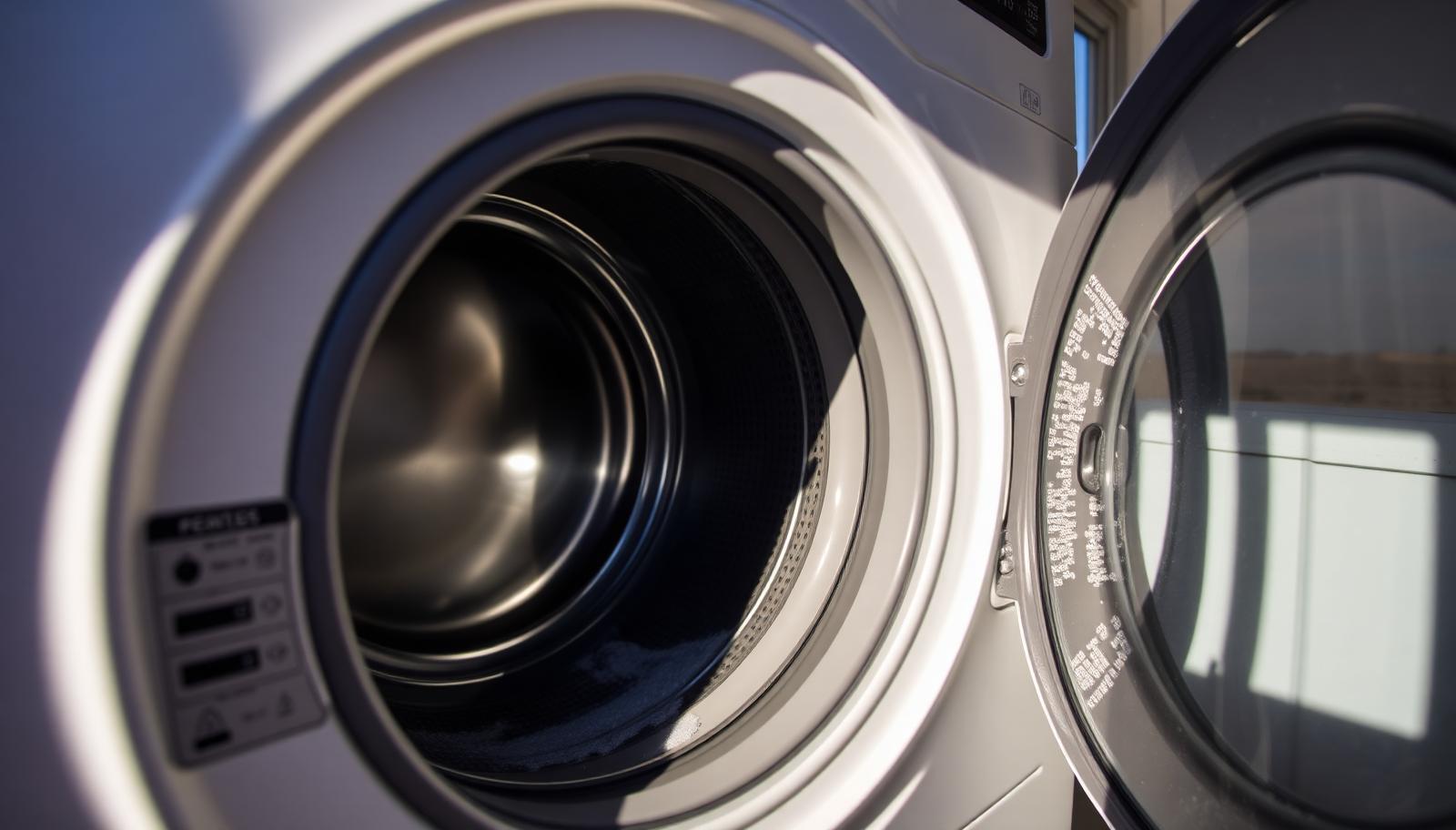
What scale actually does inside a washer
Valley water carries a heavy load of dissolved calcium and magnesium. Every time a washer heats or evaporates that water, some of those minerals come out of solution and bond to whatever surface is handy. The deposit is hard, insulating, and porous — which is why it causes three separate problems at once.
- Restriction: scale narrows valve orifices, inlet screens, and internal hoses, so fill slows and pressure sensors see the wrong thing.
- Insulation: a scaled heating element has to run hotter and longer to reach the same water temperature, which shortens its life and drives up energy use.
- Residue trapping: the porous surface holds detergent and body soil, which is the real source of the musty smell owners blame on the machine's design.
It's cumulative, not sudden
The parts that fail first in the valley
- Heating element: the classic hard-water casualty. Scale insulates it until it overheats and opens.
- Water inlet valve: mineral deposits on the screen and seat cause slow fill and eventually a valve that won't fully close.
- Door gasket (front-load): mineral crust plus detergent residue in the folds, leading to leaks and odor.
- Drain pump and filter: flakes of scale break loose and lodge in the pump with lint and hair.
- Pressure switch / level sensor hose: a partially blocked hose makes the machine misjudge water level, which shows up as odd cycle behavior and error codes.
- Bearings and suspension: not scale directly, but the extra cycle time and heavier loads that follow poor rinsing accelerate the wear.
All of those are repairable — see washer repair for what we handle on site. The question worth answering is why they scaled up in the first place.
Symptoms, decoded
- Stiff, gray, scratchy laundry: mineral plus detergent film bonded to fibers — usually a dosing and rinsing problem, not the machine.
- Persistent musty smell: residue in the gasket, sump, or hoses; if it returns within days of cleaning, there's trapped residue deeper in.
- Slow fill or long cycles: restricted inlet valve or screen.
- Water never seems hot: scaled heating element on models that heat internally.
- White crust on the gasket or door glass: visible confirmation of what's happening where you can't see.
- Detergent still visible after a cycle: over-dosing, poor rinsing, or both.
The detergent mistake almost everyone makes here
Hard water does reduce detergent effectiveness, so the instinctive fix is to add more. That backfires. Excess surfactant doesn't rinse out of a low-water cycle; it stays behind, combines with minerals, and builds the film that causes odor, gray laundry, and residue-related pump problems.
Use the hard-water dose printed on the package as a ceiling, not a starting point — and if you install a softener, cut the dose substantially. Softened water needs dramatically less detergent than most people expect.
The routine that buys back years
- Every 1–2 months: run a descaling cycle with a washing-machine descaler or citric-acid cleaner on the hottest empty cycle.
- Weekly (front-load): wipe and dry the gasket fold, including under the lip.
- Every load: leave the door ajar afterward so the drum dries.
- Quarterly: clean the drain pump filter if your model has an access panel, and check the detergent drawer for hardened residue.
- Annually: inspect fill hoses and replace any that are more than five years old — scale plus pressure is how hoses fail.
- Never: leave wet laundry in the drum overnight, especially in summer.
Rentals need this on a calendar
Softeners, filters, and what actually helps
A whole-house softener is the highest-impact change available to a Las Vegas homeowner who cares about appliance life. It protects the washer, the dishwasher, the water heater, and the fixtures simultaneously, and it lets you use far less detergent.
- Ion-exchange softener: the real solution for scale. Requires salt and periodic service.
- Template-assisted crystallization (salt-free \u201cconditioners\u201d): changes how minerals precipitate; helps some, but does not remove hardness.
- Sediment pre-filter: useful for grit, does nothing for dissolved hardness.
- In-wash water softening additives: a reasonable stopgap for laundry results if a softener isn't practical.
The broader picture across every appliance in the house is in our Las Vegas hard water appliance guide.
Buying a washer for Las Vegas water
- Prefer a model with an accessible drain pump filter — you will use it
- Stainless drum and a removable, cleanable gasket design
- An internal heater with a real sanitize cycle helps descaling cycles work properly
- Avoid models with a reputation for inaccessible sumps; residue is the local failure mode
- Check parts availability and repairability before you buy — a washer here earns its keep by being serviceable
Repair or replace?
Scale-related failures are usually worth repairing: heating elements, inlet valves, pumps, and gaskets are all reasonable parts on a machine under roughly eight years old. The conversation changes with drum bearing failure or a cracked spider on an older unit, where labor plus parts approaches replacement cost.
We diagnose on site, quote before starting, and cover completed repairs with a one-year parts and labor warranty. Local pages: Henderson washer repair and all service areas.
Frequently asked questions
Does hard water shorten a washing machine's life?
Yes, indirectly but reliably. Dissolved calcium and magnesium precipitate as scale on heating elements, inlet valves, internal hoses, and the drum. Scale restricts flow, insulates heaters, holds detergent residue, and accelerates seal and pump wear — so components fail earlier than they would on soft water.
How hard is Las Vegas water?
Very hard. Valley water comes largely from Lake Mead and the Colorado River and carries a heavy dissolved mineral load — among the hardest municipal water in the United States. It's safe to drink; the problem it creates is scale, not health.
How long should a washer last in Las Vegas?
Manufacturers generally cite ten to thirteen years for a modern washer. In the valley, machines that never get descaled and are run with too much detergent commonly show scale-related failures years earlier, while well-maintained machines reach or exceed the normal range.
What are the signs of scale in a washing machine?
Slow fill, water that never gets fully hot, stiff or gray laundry, a persistent musty smell, visible white crust on the door gasket or heating element, poor rinsing with detergent residue left behind, and error codes related to fill time or water level.
Is a water softener worth it for a washer in Las Vegas?
For appliance longevity, yes. A softener is the single most effective change: it prevents scale on the heater and valves, lets you cut detergent use substantially, and improves wash results at lower temperatures. It benefits the dishwasher, water heater, and fixtures at the same time.
How often should I descale my washer here?
Every one to two months in the valley, rather than the annual interval most manuals assume. Use a washing-machine descaler or a citric-acid cleaner on a hot cycle with an empty drum.
Does hard water mean I should use more detergent?
That's the common instinct and it's usually backwards. Hard water does reduce detergent effectiveness, but overdosing leaves residue that combines with minerals into a film inside the machine and on fabrics. Use the dosing recommended for hard water on the package — no more — or install a softener and use less.
Do front-loaders or top-loaders handle hard water better?
Neither wins outright. Front-loaders use less water, which concentrates minerals and detergent in the drum and gasket, so they need more gasket and descaling discipline. Top-loaders flush more freely but move more scale into the pump and hoses. Maintenance matters more than the format.
Can a scaled heating element be repaired?
A heavily scaled element is usually replaced rather than cleaned, and it's a routine repair. The important part is fixing the cause — descaling routine, detergent dosing, or a softener — so the replacement doesn't scale up the same way.
Is vinegar safe to use in my washer?
Occasional diluted use is common, but repeated high-strength vinegar cycles can attack rubber seals and gaskets over time. A purpose-made washing-machine descaler or citric-acid cleaner is the safer choice for a routine every-month-or-two schedule.
More Las Vegas appliance guides
Read before you call
Free, Las Vegas-specific advice from our technicians.
- Las Vegas hard water appliance guideHow valley water chemistry scales up dishwashers, ice makers, and washers — and what actually prevents it.
- Summer heat & refrigerator careCoil cleaning, garage refrigerators, and keeping luxury built-ins alive through a 110°F summer.
- Las Vegas appliance repair cost guideTypical 2026 repair price ranges by appliance and when repair beats replacement.
- Las Vegas hard water reportValley hardness numbers and which appliances scale damages first.
Related appliance repair services
Get help from a local Las Vegas technician
Scale, odor, slow fill, or a machine that won't drain — we repair all of it across the Las Vegas valley.