How dryer fires actually start
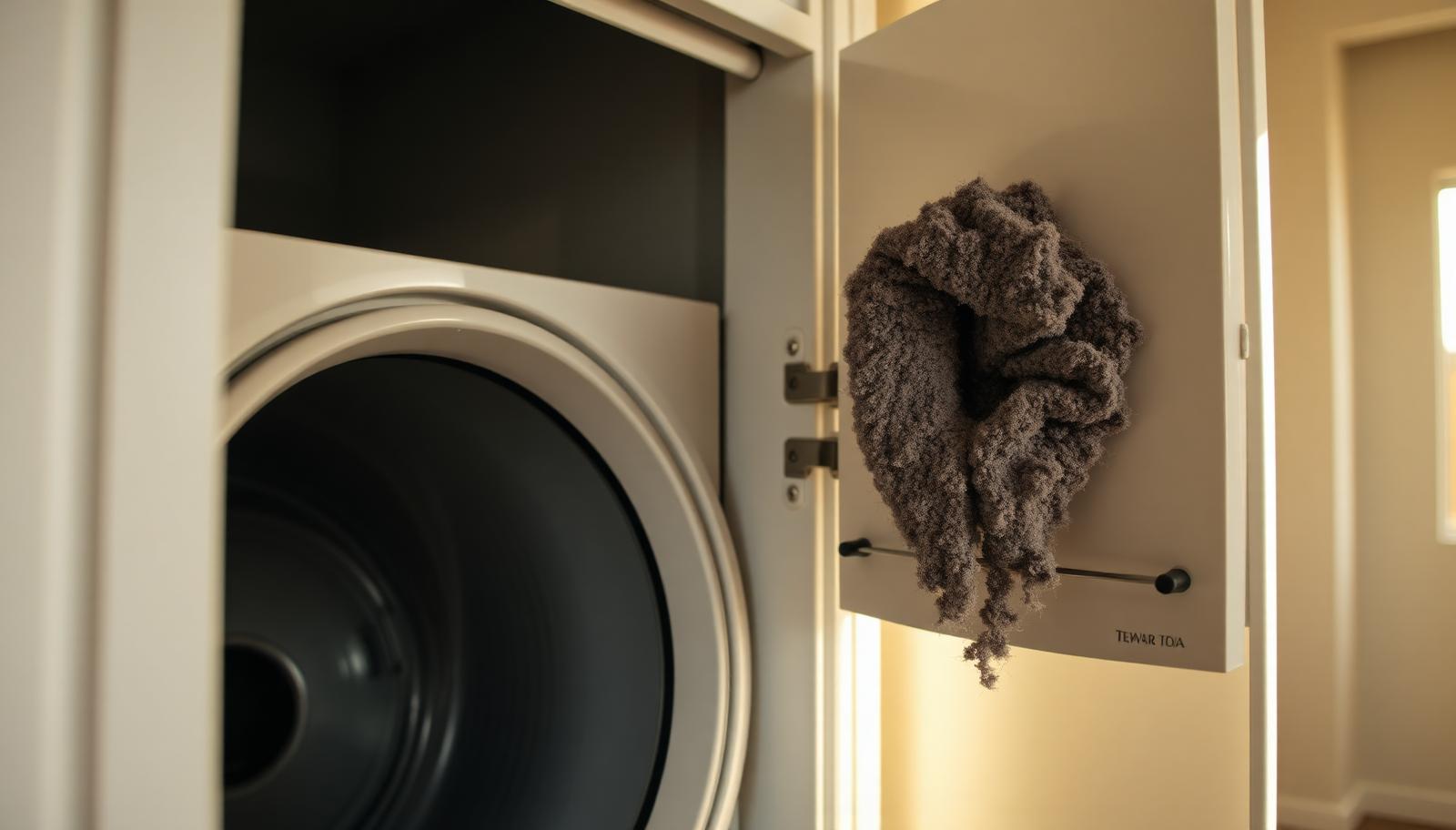
A dryer works by pushing hot air through wet laundry and out of the house. Lint is the by-product, and the lint screen only catches part of it — the rest travels into the duct, where it settles wherever airflow slows down: at elbows, at crushed sections, and at the exterior termination.
As the deposit thickens, less air escapes. Less airflow means the machine's internal temperature climbs, the cycle runs longer, and the thermal cutoffs start working overtime. Now you have highly combustible, dry lint packed against a heat source, with the airflow that would normally carry heat away restricted. That's the whole mechanism — it isn't exotic, and it's entirely preventable.
If you smell hot lint, stop
Why Las Vegas homes carry extra risk
National advice assumes a short duct through an exterior wall. A lot of valley housing doesn't look like that.
- Upstairs and interior laundry rooms. Second-floor and closet laundry means long runs with multiple elbows terminating through the roof — more length, more bends, more places lint settles.
- Desert dust. Fine airborne dust mixes with lint into a denser, more tightly packed deposit than lint alone.
- Heat. Garage and attic temperatures well over 100°F leave the machine less thermal headroom to begin with.
- Roof terminations. Birds and rodents nest in them, and the blockage is invisible from inside the house.
- Rentals and short-term rentals. High turnover, nobody tracking maintenance, and guests who never mention slow drying.
Those same restrictions are why so many Las Vegas homeowners call us about a dryer that "takes three cycles." See our dryer repair page for the mechanical failures that restriction eventually causes.
Warning signs you can check today
- Laundry needs more than one cycle to dry
- The dryer, the laundry room, or the clothes come out unusually hot
- A hot-lint or burning smell during operation
- The exterior vent flap doesn't open, or barely flutters, while the dryer runs
- Lint appearing on the floor around the dryer or on the door seal
- The dryer shuts off mid-cycle and restarts after it cools
- You cannot remember the last time the vent was cleaned
The 60-second airflow test
The duct behind your dryer matters as much as the vent
The transition hose — the short connector between the dryer and the wall — is where we find the worst problems. Thin foil and plastic accordion hoses crush behind the machine, and every ridge collects lint. Modern codes call for rigid or semi-rigid metal duct for exactly that reason.
- Use rigid or semi-rigid metal duct, never plastic or thin foil
- Keep the transition as short and straight as physically possible
- Don't crush the hose by shoving the dryer flat against the wall
- Seal joints with foil tape, never sheet-metal screws (screws catch lint)
- Make sure the termination has a working flap and no screen or mesh cover
The Las Vegas maintenance schedule
- Every load: clear the lint screen.
- Every few months: wash the lint screen in warm soapy water to remove fabric-softener film; vacuum the lint trap housing.
- Every 6–12 months: clean the full vent run — annually for a typical home, semiannually with pets, heavy use, or a long roof-terminated run.
- Annually: pull the dryer out and vacuum behind and underneath it, and inspect the transition hose.
- Between tenants: clean the vent as part of turnover on any rental.
We handle this as a standalone service — see dryer vent cleaning — and we check airflow on every dryer service call, because the vent is frequently the actual fix.
DIY versus calling someone
A short, straight, ground-level run through an exterior wall is a fair DIY job with a rotary brush kit and a shop vac. Long runs, roof terminations, upstairs laundry, and stacked units are worth handing off — a partial cleaning that compacts lint further down the run leaves you worse off than before, and roof work in Las Vegas summer heat is genuinely hazardous.
Landlords, property managers, and short-term rentals
Vent cleaning is the cheapest liability reduction available on a Las Vegas rental. Tenants and guests rarely report long dry times, so the restriction builds unnoticed for years. Put it on the turnover checklist, document the date, and pair it with the rest of the appliance items in our rental maintenance checklist.
Hard water is the other local appliance killer in laundry rooms — see hard water and washer lifespan for the washer side of the same room.
Frequently asked questions
Can a clogged dryer vent really start a fire?
Yes. According to the U.S. Fire Administration and NFPA data, clothes dryers and washers are involved in roughly 15,000 U.S. home structure fires a year, and failure to clean is the leading contributing factor in the dryer cases. Lint is highly combustible, and a restricted vent traps both lint and heat.
How often should I clean my dryer vent in Las Vegas?
Once a year for a typical household, and every six months if you have pets, a large family, a long vent run, or an upstairs laundry room. Many Las Vegas valley homes have long roof-terminated runs that load with lint faster than a short exterior-wall vent.
What are the warning signs of a clogged dryer vent?
Clothes taking more than one cycle to dry, the dryer or laundry room feeling unusually hot, a hot-lint or burning smell, the exterior vent flap not opening while the dryer runs, lint appearing around the door seal, and the dryer shutting itself off mid-cycle.
Does dryer sheet and fabric softener use matter?
It does. Softener residue coats the lint screen and reduces airflow through it. Wash the lint screen with warm soapy water twice a year — if water pools on the screen instead of flowing through, it's coated.
Is flexible foil duct behind my dryer a problem?
Yes. Thin foil and plastic accordion transition hoses crush easily, trap lint in every ridge, and are prohibited by most modern codes. Replace them with rigid or semi-rigid metal duct kept as short and straight as possible.
Why do Las Vegas homes have extra dryer vent risk?
Three local factors stack up: many valley homes have second-floor or interior-closet laundry with long, multi-elbow runs to a roof termination; desert dust mixes with lint into a denser deposit; and high ambient garage and attic temperatures give heat less room to dissipate. Bird and rodent nesting in roof terminations is also common here.
Can I clean the dryer vent myself?
A short, straight, ground-level run is a reasonable DIY job with a rotary brush kit. Long runs, roof terminations, upstairs laundry rooms, and any run you can't see the end of are worth having done professionally — an incomplete cleaning that just packs lint tighter is worse than none.
Does a longer dry time always mean the vent is clogged?
Not always, but it's the first thing to check. Restricted airflow is by far the most common cause. If the vent is clear and dry times are still long, the next suspects are the heating element or gas valve, thermostats, the blower wheel, and the moisture sensor.
What should I do if I smell burning lint?
Stop using the dryer immediately, unplug it or shut off the gas, and have the dryer and full vent run inspected before running another load. That smell means lint is accumulating against a heat source.
Do rental properties need vent cleaning more often?
Usually yes. Tenants rarely report slow dry times, and turnover means nobody tracks the last cleaning. Annual service between tenants is the practical standard for Las Vegas rentals and short-term rentals.
More Las Vegas appliance guides
Read before you call
Free, Las Vegas-specific advice from our technicians.
- Las Vegas hard water appliance guideHow valley water chemistry scales up dishwashers, ice makers, and washers — and what actually prevents it.
- Summer heat & refrigerator careCoil cleaning, garage refrigerators, and keeping luxury built-ins alive through a 110°F summer.
- Las Vegas appliance repair cost guideTypical 2026 repair price ranges by appliance and when repair beats replacement.
- Las Vegas hard water reportValley hardness numbers and which appliances scale damages first.
Related appliance repair services
Get help from a local Las Vegas technician
Long dry times, no heat, or an overdue vent cleaning — we handle all three across the valley.